
HACCP monitoring records are only useful if they capture real observations at the time of the check and are reviewed promptly by someone authorized to act on them. Complete records and timely verification turn routine checks into evidence that each critical control point is under control.
Food manufacturers who want to supply large retailers such as Costco need reliable, documented controls. They also need to explain those controls clearly. This guide sets out practical steps for better monitoring records. Regulatory duties depend on the product, the facility and the transaction. Retailer-specific supplier conditions should always be confirmed directly with the buyer.
Quick answer
Build each form around the control it monitors. Then train staff to record actual values in real time with suitable, calibrated instruments. Make deviations easy to see, and have an authorized person review records, corrective actions and product status. The NACMCF HACCP guidelines state that CCP monitoring records should be dated and signed or initialed by the person doing the monitoring.
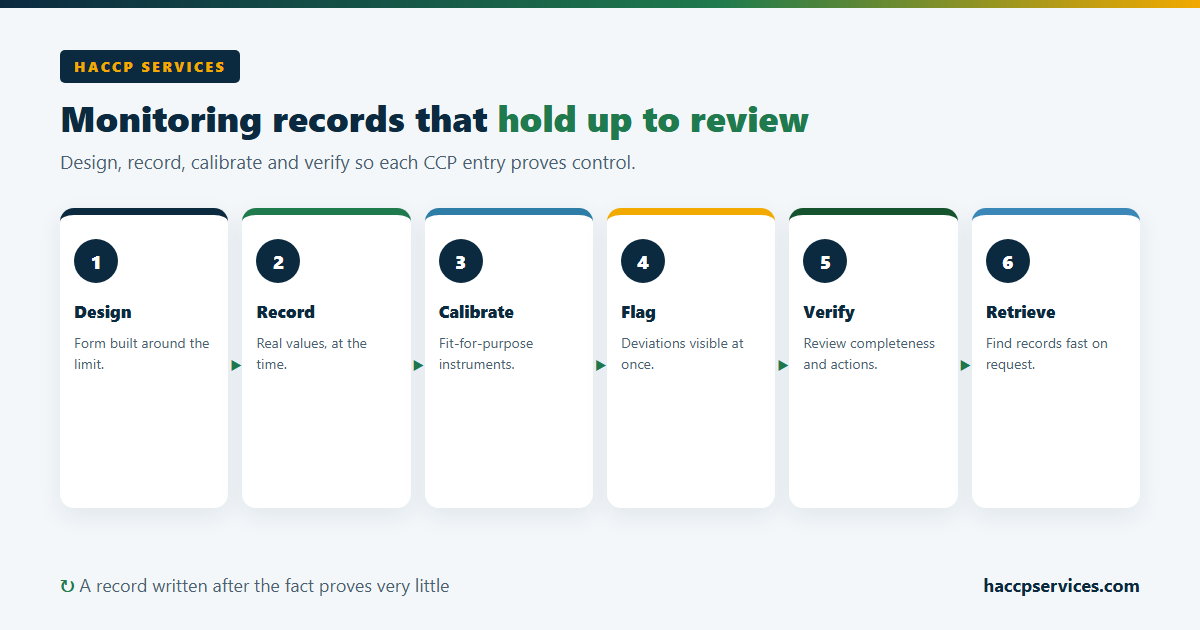
1. Design the form around the control
Include the equipment, product, lot, monitored parameter and critical limit. Add fields for the observation time, measured result, initials and deviation path. A good form makes an out-of-limit result visible and hard to overlook. Our HACCP monitoring procedures page explains how forms fit into the wider monitoring plan.
2. Train for real-time recording
Monitoring records should reflect actual observations at the specified frequency. Entering data in bulk afterwards, or copying past readings, undermines the reliability of a HACCP program. The rules agree. Under 9 CFR 417.5(b), each entry must be made when the event occurs and be signed or initialed. Similarly, 21 CFR 117.305 requires records to contain actual values and be created at the time of the activity.
3. Keep instruments fit for purpose
Use instruments with the correct range and accuracy, and link each observation to the relevant calibration checks. An acceptable-looking reading means little if the thermometer or sensor was not suitable. For this reason, calibration is a listed verification activity in 21 CFR 117.165(a)(1). Our calibration and measurement control program service can help.
4. Review exceptions and dispositions
Assign an authorized verifier to check completeness, missed checks, deviations, corrective actions and the status of affected product. Verification timing and retention depend on the rules that apply and on the process. For example, Part 117 facilities must review monitoring and corrective action records within 7 working days, or within a justified reasonable timeframe (117.165(a)(4)). USDA-inspected plants must review records before shipping product, under 9 CFR 417.5(c). See our HACCP verification and validation page for more detail.
5. Use records in retail readiness
A potential Costco supplier should be able to retrieve a recent monitoring record quickly. The team should also explain how a deviation was handled and what happened to the product. This does not mean Costco has a universal HACCP certification mandate. Instead, confirm each buyer’s requirements in writing. Our post on HACCP process deviations and batch records shows how deviation records support this conversation.
Frequently asked questions
What should a CCP monitoring record include?
It should include the product, lot, parameter, critical limit, time, actual result, the monitor’s initials and the deviation path.
Can monitoring records be completed at the end of a shift?
No. Entries should be made when the check is performed. Bulk entry afterwards weakens the record as evidence.
Who should review monitoring records?
An authorized, trained verifier. Under Part 117, review is done by or under the oversight of a preventive controls qualified individual.
Supplier readiness checklist
- Confirm the applicable regulation, certification scope and buyer-specific requirements in writing.
- Identify the accountable process owner and the current approved procedures.
- Collect recent objective records tied to the correct facility, product and lots.
- Resolve exceptions with documented corrective actions and effectiveness checks.
- Test record retrieval and make the review package available to authorized reviewers.
How HACCP Services can help
HACCP Services, a service of Consultare Inc. Group, supports monitoring form design, recordkeeping systems, calibration programs and verification review, subject to the engagement scope.
- CCP monitoring system design
- HACCP recordkeeping and digital system setup
- Corrective action management
- HACCP document control and version management
Need help with your HACCP records?
Share your product category, manufacturing location, current program and expected distribution timeline. Then we can focus on the gaps that matter most. You can book a free consultation or contact our team.
Start building your compliance system
If you prefer to organize and manage your compliance activities yourself, you can also create a free SystemsBuilder account. Then begin building a structured system for your compliance documentation and processes.
Technical sources: FDA / NACMCF HACCP Principles and Application Guidelines, FSMA Final Rule for Preventive Controls for Human Food, 21 CFR 117.165, 21 CFR 117.305 and 9 CFR 417.5. This article is educational, not legal advice or a statement of Costco supplier approval policy. HACCP Services is independent of Costco Wholesale and FDA, and does not claim affiliation, endorsement or authority to approve suppliers. Requirements may change, so confirm current rules and written buyer terms before relying on this guide.