
Imported ingredient supplier controls start with the hazards each ingredient can bring into your facility. Those hazards must be considered in the facility’s hazard analysis. Supplier documentation and receiving controls may then form part of a HACCP-based food safety program.
At the same time, separate importer obligations should not be overlooked. A HACCP-based hazard analysis can help identify ingredient hazards and needed supplier controls, but a HACCP plan is not automatically a substitute for a Foreign Supplier Verification Program (FSVP) under 21 CFR Part 1, Subpart L.
Who this article is for
This guide is written for HACCP teams, food and animal food (feed) manufacturers, hazard-analysis specialists and supplier quality managers.
1. Define the imported material and its intended use
First, document raw materials, supplier identities, specifications and where each ingredient enters the process flow. This gives the hazard analysis a clear starting point.
2. Assess relevant ingredient hazards
Next, consider biological, chemical and physical hazards based on the product and the receiving and manufacturing circumstances. Do not assume that all imported materials pose the same risks. A structured HACCP hazard analysis keeps this review consistent.
3. Identify imported ingredient supplier controls and prerequisites
Evaluate incoming material controls, supplier approval, purchasing specifications and receiving checks in the context of the applicable framework. For animal food facilities subject to 21 CFR Part 507, the supply-chain program requirements sit in Subpart E (507.105 to 507.175). A supplier HACCP evaluation can show where gaps remain.
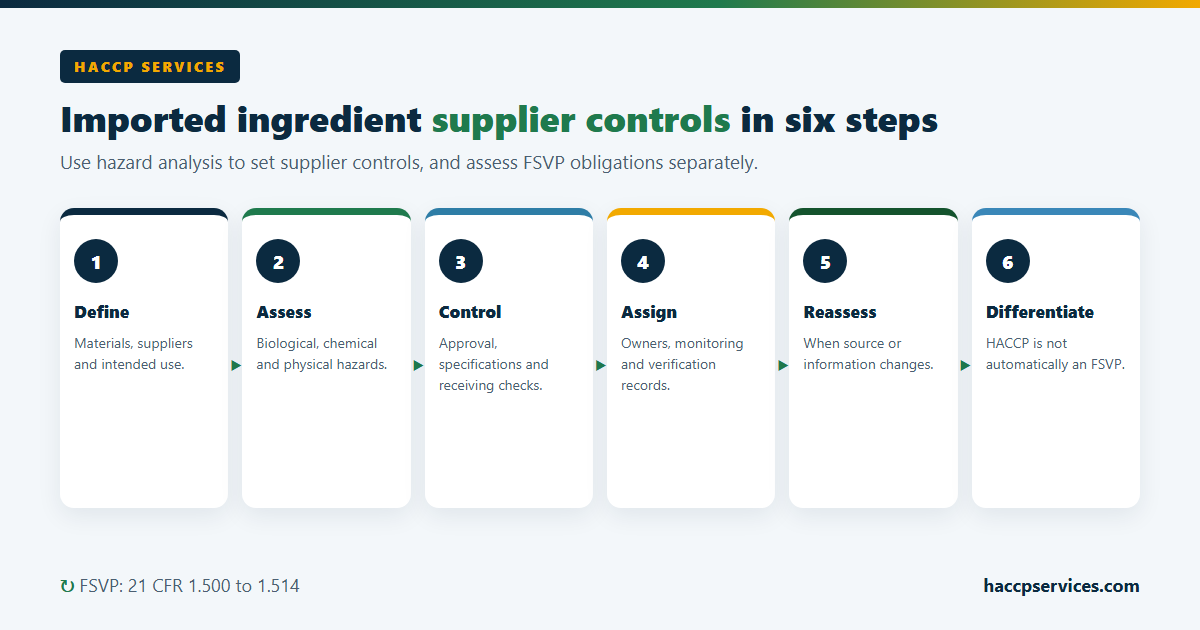
4. Assign responsibilities and maintain records
Document monitoring, verification, deviation handling and who reviews supplier-related evidence. Clear verification and validation records make supplier decisions easier to defend.
5. Reassess when supplier conditions change
Review the hazard analysis when the ingredient source, processing, intended use or available safety information changes. In addition, update approval decisions and specifications to match.
6. Differentiate HACCP and FSVP
HACCP supports food safety planning, while FSVP is a separate FDA importer framework. Whether an exemption or modified provision applies depends on the food, the activities and the regulatory scope. For example, under 21 CFR 1.502(c) a receiving facility that complies with the relevant preventive controls or supply-chain program requirements of Part 117 or Part 507 is deemed in compliance with most FSVP requirements, except the importer identification requirement in 1.509.
Frequently asked questions
Are all imported ingredients automatically CCPs?
No. The hazard analysis and the applicable framework determine the controls required. Many supplier controls are prerequisite programs rather than CCPs.
Does supplier approval replace hazard analysis?
No. Supplier approval is informed by the hazards and by the overall food safety program.
Does HACCP alone establish FSVP compliance?
No. FSVP applicability and obligations must be assessed independently.
Imported ingredient supplier controls checklist
- Have you identified the relevant products, foreign suppliers, legal roles and applicable regulatory or certification scope?
- Are current specifications, evaluations, approval decisions and verification evidence maintained?
- Are owners and review dates assigned to supplier-related records and changes?
- Are deficiencies, corrective actions, closure evidence and effectiveness reviews documented?
- Has FSVP applicability been assessed separately from the HACCP plan?
How HACCP Services can help
HACCP Services, a service of Consultare Inc. Group, can support hazard analysis and HACCP plan reviews, ingredient and supplier control assessment, prerequisite program development, monitoring and verification procedures, and corrective action. Activities and deliverables depend on the products, parties, regulatory requirements and agreed project scope.
- Supplier HACCP evaluation
- Prerequisite program (PRP) gap assessment
- HACCP plan reassessment
- HACCP corrective action management
Need help managing your HACCP responsibilities?
Discuss your imported materials, suppliers, program records and compliance priorities with our team. You can book a free consultation with HACCP Services or contact our team.
Start building your compliance system
If you prefer to organize and manage your compliance activities yourself, you can also create a free SystemsBuilder account. Then begin building a structured system for your compliance documentation and processes.
Technical sources: 21 CFR Part 1, Subpart L (FSVP), 21 CFR Part 507 and FDA FSMA Final Rule on FSVP. This article is educational; specific requirements depend on your products, processes and applicable regulations.