
HACCP for sprouts starts with one fact: the warm, moist conditions that make seeds germinate also let pathogens multiply. Seed-borne Salmonella and E. coli O157:H7, contaminated irrigation water and Listeria in the growing environment can all reach a product that is often eaten raw.
A HACCP-style hazard analysis helps you organize these risks. However, U.S. sprout operations covered by the FDA Produce Safety Rule must also meet its specific sprout requirements in 21 CFR Part 112, Subpart M. Calling a step a critical control point (CCP) does not replace those testing duties.
Who this article is for
This guide is written for sprout growers, food safety managers, quality assurance leaders and seed procurement teams. Specific duties depend on the operation, product and applicable rule.
1. Map sprout production steps
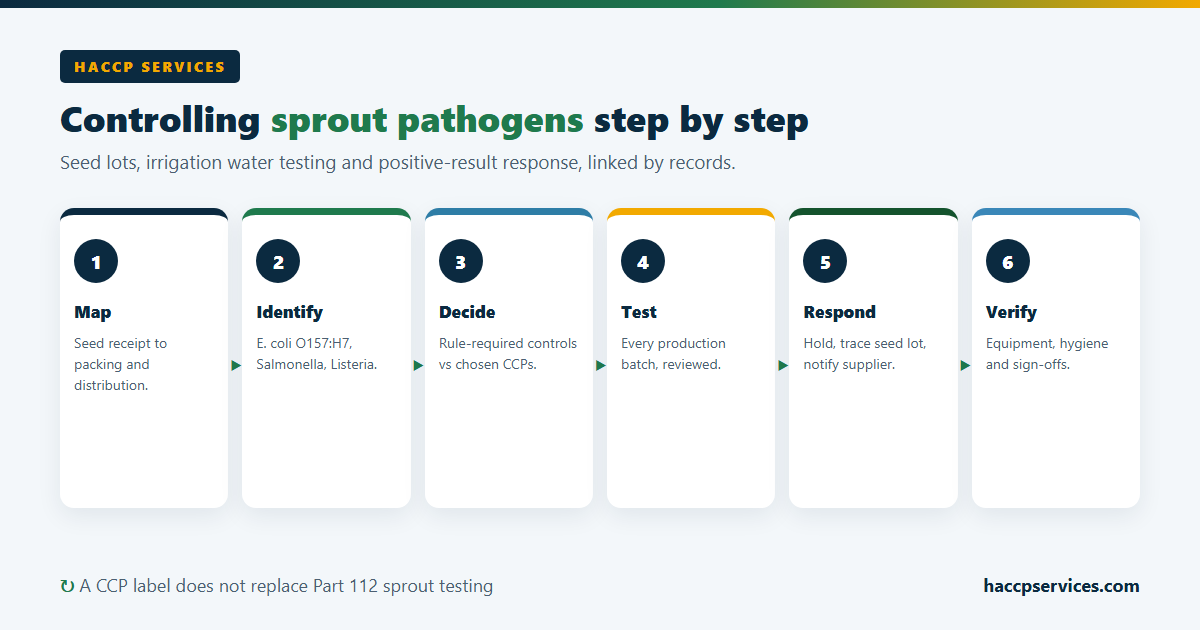
Document seed receipt, seed treatment, soaking, germination, irrigation, harvest, rinsing, packing and distribution. Then walk the line to confirm the flow diagram matches what really happens. Our HACCP hazard analysis guide explains how to build it.
2. Identify sprout pathogen hazards
Evaluate E. coli O157:H7, Salmonella and environmental Listeria for the actual product and process. Seed is the most common source, so include the seed supplier, seed lot and treatment method in the analysis.
3. Define controls and decision points
Separate the controls the sprout rule requires, such as seed treatment, testing and environmental monitoring, from controls your team chooses. Not every control is a CCP; see HACCP critical control points for how to decide.
4. Check sampling coverage and results
Covered operations test spent sprout irrigation water, or in-process sprouts, from each production batch for E. coli O157:H7 and Salmonella, and sample the environment for Listeria. Therefore, confirm that sampling covers every batch, that lab methods are suitable, and that results are reviewed before release.
5. Respond to positive results
Stop affected product from moving forward, then evaluate the seed lot and every batch linked to it. Document supplier notification, disposition and corrective action. A later negative retest does not cancel an earlier positive. The HACCP corrective actions principle explains what a complete response includes.
6. Verify hygienic operations
Finally, assess equipment condition, cleaning, glove practices, records, supervisor sign-offs and recurring deviations. Rough welds, damaged belts and seams can harbor pathogens that environmental monitoring will eventually find.
Frequently asked questions
Why are sprouts a high-attention food safety category?
Germination conditions also support growth of pathogens from contaminated seed or the production environment, and sprouts are often eaten raw.
Does a negative retest erase an earlier positive result?
No. The original result and the required response must still be evaluated.
Why does seed-lot traceability matter?
It identifies other batches linked to a contaminated seed lot and supports supplier communication, containment and follow-up.
HACCP for sprouts checklist
- Have you confirmed which rules and certification requirements actually apply?
- Is each production batch linked to its seed lot and supplier?
- Are required microbial tests and environmental monitoring done on schedule?
- Are equipment and food-contact areas inspectable, cleanable and maintained?
- Are test results, deviations, corrective actions and record reviews kept?
How HACCP Services can help
HACCP Services, a service of Consultare Inc. Group, supports sprout hazard analysis, monitoring design, environmental monitoring programs and corrective action procedures, subject to the engagement scope and applicable requirements.
- Environmental monitoring program design
- Supplier program evaluation
- Traceability and recall program
- Fresh produce HACCP plans
Need help managing your HACCP responsibilities?
Discuss your products, operations, records and compliance priorities with our team. You can book a free consultation or contact our team.
Start building your compliance system
If you prefer to organize and manage your compliance activities yourself, you can also create a free SystemsBuilder account. Then begin building a structured system for your compliance documentation and processes.
Technical sources: 21 CFR Part 112, Subpart M (Sprouts) and FDA Hazard Analysis Critical Control Point (HACCP). This article is educational; HACCP Services is not affiliated with FDA, and specific requirements depend on your products, processes and applicable regulations.