
Process flow diagram verification means walking the real operation and confirming that every step on paper matches what happens on the floor, before the hazard analysis begins. If a step is missing from the diagram, its hazards will be missing from the analysis too.
Food manufacturers who want to supply large retailers such as Costco need reliable, documented controls. They also need to explain those controls clearly. This guide sets out practical steps for checking a flow diagram. Keep in mind that regulatory duties depend on the product, the facility and the transaction. Retailer-specific supplier conditions should always be confirmed directly with the buyer.
Quick answer
Describe the product and its intended use, map every step, then walk the line during normal production to confirm the diagram. Next, correct any gaps and use each verified step in the hazard analysis. Finally, re-verify the diagram whenever equipment, ingredients or routes change. The NACMCF HACCP Principles and Application Guidelines list “verify the flow diagram” as one of five preliminary tasks. The HACCP team should review the operation on site and document any changes.
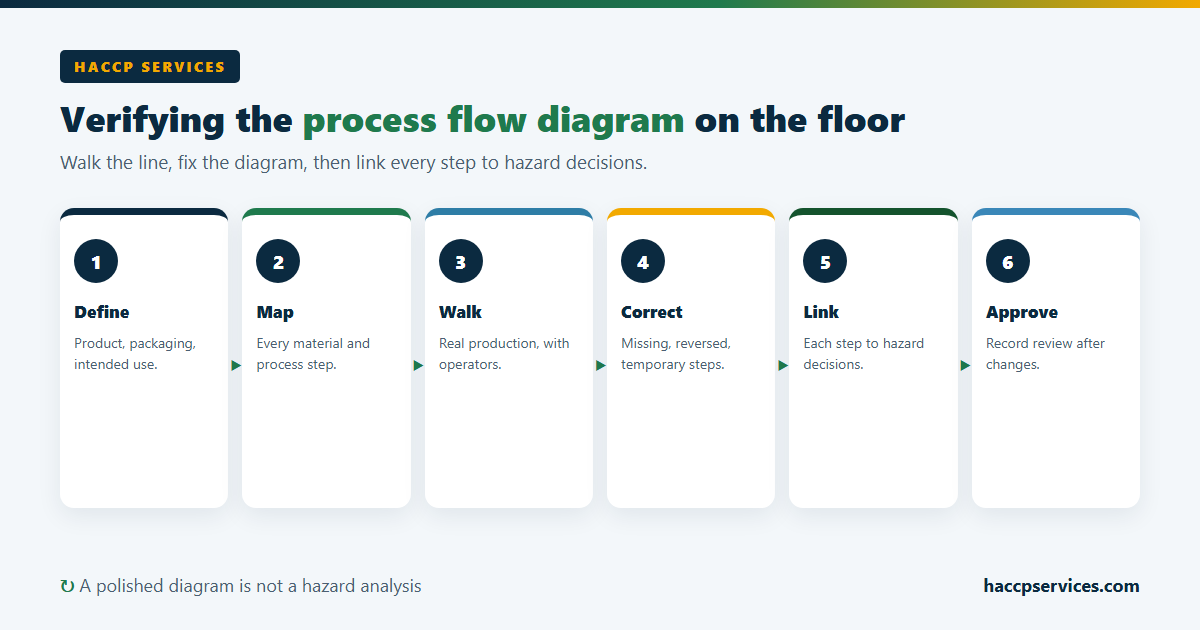
1. Define the product and intended use
Start by recording the food’s composition, packaging, shelf life and distribution conditions. Then note the intended consumer and any foreseeable handling. This context matters because it changes which hazards must be evaluated at each step. For USDA-inspected meat and poultry plants, 9 CFR 417.2(a)(2) requires a flow chart of each process and identification of the intended use or consumers.
2. Map every material and processing step
Capture receiving, storage, thawing, preparation, heating and cooling. Also include rework, filling, foreign material controls, labeling, finished goods handling and shipping where they apply. In addition, add waste streams, returns and outsourced operations if they are relevant. A simple schematic of the facility often helps the team see how product and people move.
3. Confirm the diagram on site
Walk the process during representative production with operators and technical staff. Test the diagram against the real equipment, shared lines, shift differences and temporary staging areas. As you walk, capture any missing or reversed steps. Our facility and process flow optimization service can support this review.
4. Link each step to hazard decisions
For every verified step, assess the reasonably foreseeable biological, chemical and physical hazards. Then decide on controls using the food safety method that applies to you. For most FDA-registered facilities, that is the written hazard analysis in 21 CFR 117.130. Juice and seafood processors follow HACCP rules in Parts 120 and 123. Remember that a polished diagram is not, by itself, a complete hazard analysis. Our HACCP hazard analysis guide explains the method, and the critical control points page covers the next decision.
5. Review changes and document approval
Update the controlled diagram after new equipment, ingredients, recipes or process routes. Then record the site verification and the authorized review. NACMCF also lists confirmation of flow diagram accuracy among routine verification activities. Customer onboarding talks, including with Costco, do not replace this technical verification. See our process change impact assessment for a structured approach.
Frequently asked questions
When should a flow diagram be verified?
Verify it before the hazard analysis, during representative production. Re-verify it after any significant change to equipment, ingredients, recipes or routes.
Who should take part in the walk-through?
The HACCP or food safety team should lead it, with the operators and technical staff who run each step.
Does a verified diagram satisfy retailer requirements?
Not on its own. It is one part of a documented food safety system. Buyer-specific requirements should be confirmed in writing with the retailer.
Supplier readiness checklist
- Confirm the applicable regulation, certification scope and buyer-specific requirements in writing.
- Identify the accountable process owner and the current approved procedures.
- Collect recent objective records tied to the correct facility, product and lots.
- Resolve exceptions with documented corrective actions and effectiveness checks.
- Test record retrieval and make the review package available to authorized reviewers.
How HACCP Services can help
HACCP Services, a service of Consultare Inc. Group, supports flow diagram development and on-site verification, hazard analysis, supplier documentation and regulatory readiness, subject to the engagement scope.
- HACCP plan development
- Facility and process flow optimization
- HACCP plan validation and scientific justification
- HACCP certification and third-party audit preparation
Need help verifying your process flow diagram?
Share your product category, manufacturing location, current program and expected distribution timeline. Then we can focus on the gaps that matter most. You can book a free consultation or contact our team.
Start building your compliance system
If you prefer to organize and manage your compliance activities yourself, you can also create a free SystemsBuilder account. Then begin building a structured system for your compliance documentation and processes.
Technical sources: FDA / NACMCF HACCP Principles and Application Guidelines, FSMA Final Rule for Preventive Controls for Human Food, 21 CFR 117.130 and 9 CFR 417.2. This article is educational, not legal advice or a statement of Costco supplier approval policy. HACCP Services is independent of Costco Wholesale and FDA, and does not claim affiliation, endorsement or authority to approve suppliers. Requirements may change, so confirm current rules and written buyer terms before relying on this guide.