HACCP Services: Build a Fully Managed, Audit-Ready Food Safety System
HACCP Compliance Reality
Most companies don’t fail HACCP because they lack plans— they fail because their systems are not executed, validated, or controlled.
Regulatory Foundation
- Food Safety Modernization Act (FSMA)
- U.S. Food and Drug Administration (FDA)
- United States Department of Agriculture (USDA)
- HACCP must function as a real-time operational system
✔ Common System Failures
- Plans not aligned with operations
- Weak CCP validation
- Inconsistent monitoring
- Poor corrective action control
- Incomplete records
✔ Execution Gap
- HACCP exists as documentation, not a system
- Controls are not consistently applied on the floor
- Monitoring lacks verification and accountability
- Corrective actions are reactive, not structured
✔ Regulatory Expectation
- Systems must be operational in real time
- Controls must be validated and verifiable
- Records must demonstrate consistent execution
- Compliance must be proven—not assumed
“Is your HACCP system working in real operations?”
HACCP as a Managed System
HACCP must be structured, controlled, and measurable to ensure consistent execution and compliance.
Core Services
- HACCP Plan Development & Implementation
- Hazard Analysis & CCP Identification
- Validation & Scientific Justification
- Plan Reassessment & Annual Review
✔ System Control
- Monitoring system design
- Recordkeeping & document control
- CAPA management
- Compliance audits
✔ Operational Execution
- Defined CCP monitoring procedures
- Consistent implementation on the floor
- Real-time tracking of system performance
- Structured corrective action workflows
✔ System Outcome
- Controls are measurable and enforced
- Validation supports all critical limits
- Records demonstrate compliance
- Systems are audit-ready at all times
HACCP becomes operational—not just documented
Supporting Programs That Make HACCP Work
HACCP depends on integrated supporting systems to ensure controls are effective and sustainable in real operations.
System Dependency
- HACCP does not operate as a standalone program
- Supporting systems control hazards outside CCPs
- Programs must be aligned with process risks
- Integration ensures full system effectiveness
Core Supporting Programs
- Allergen Management
- Environmental Monitoring (EMP)
- Sanitation Programs
- Supplier Verification
- Crisis & Recall Integration
Operational Role
- Prevent hazards before they reach CCPs
- Control environmental and cross-contact risks
- Support consistent process execution
- Strengthen overall food safety system control
System Impact
- Improved hazard control across operations
- Reduced risk of system failure
- Stronger compliance and audit outcomes
- Fully integrated, verifiable HACCP system
Without these systems, HACCP cannot function effectively
Implementation & Execution Phases
HACCP systems must follow structured execution phases to ensure control, validation, and audit readiness.
Execution Framework
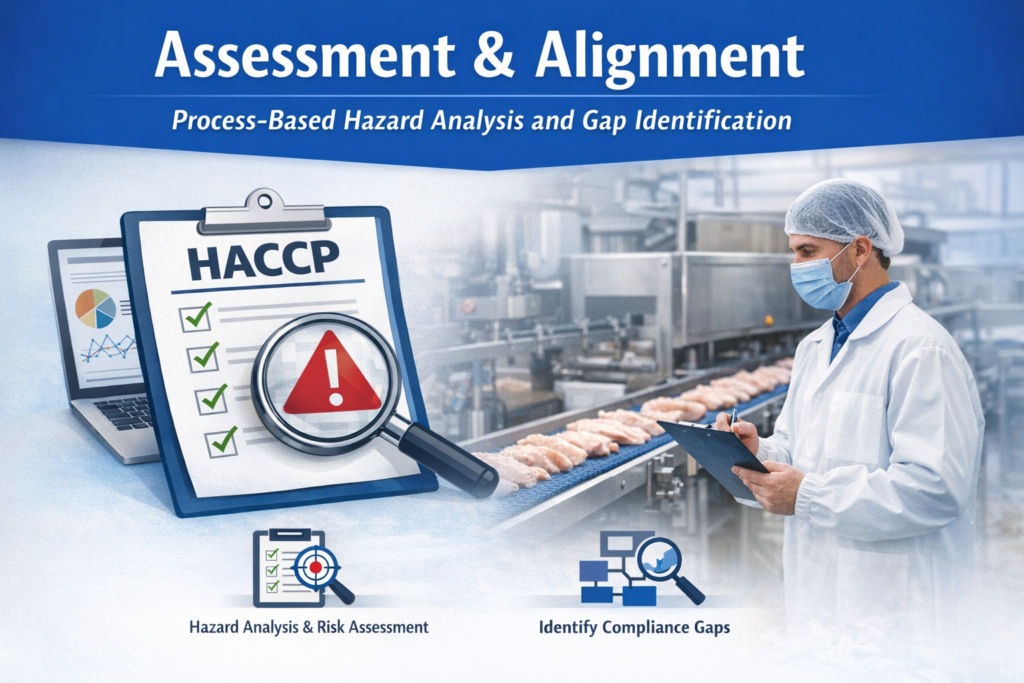
- Assessment & Alignment
- Process-based hazard analysis and gap identification
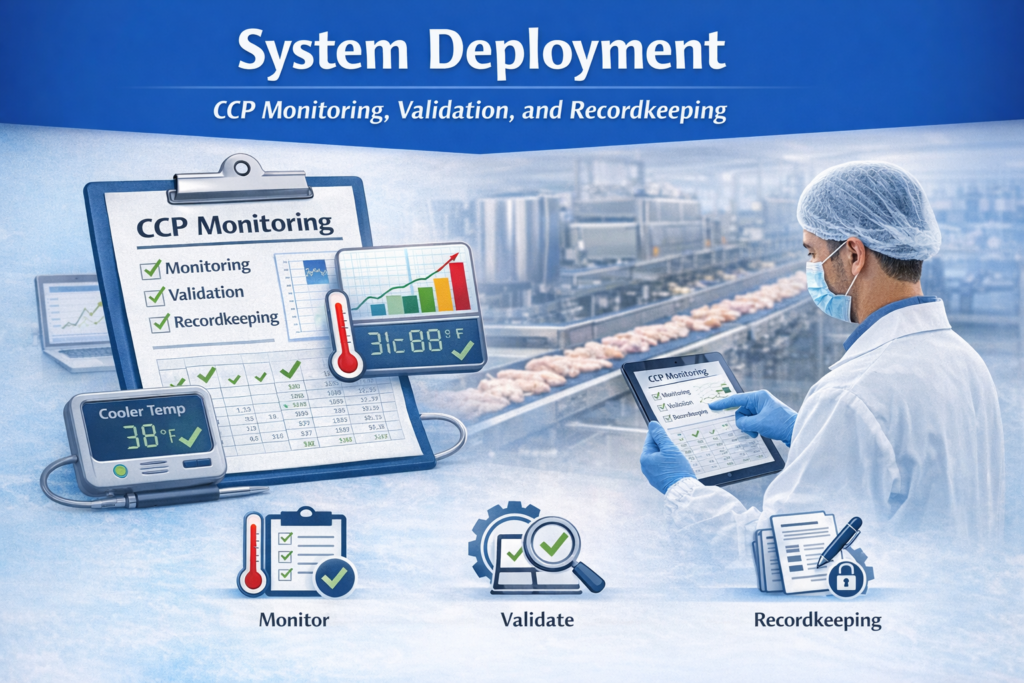
- System Deployment
- CCP monitoring, validation, and recordkeeping
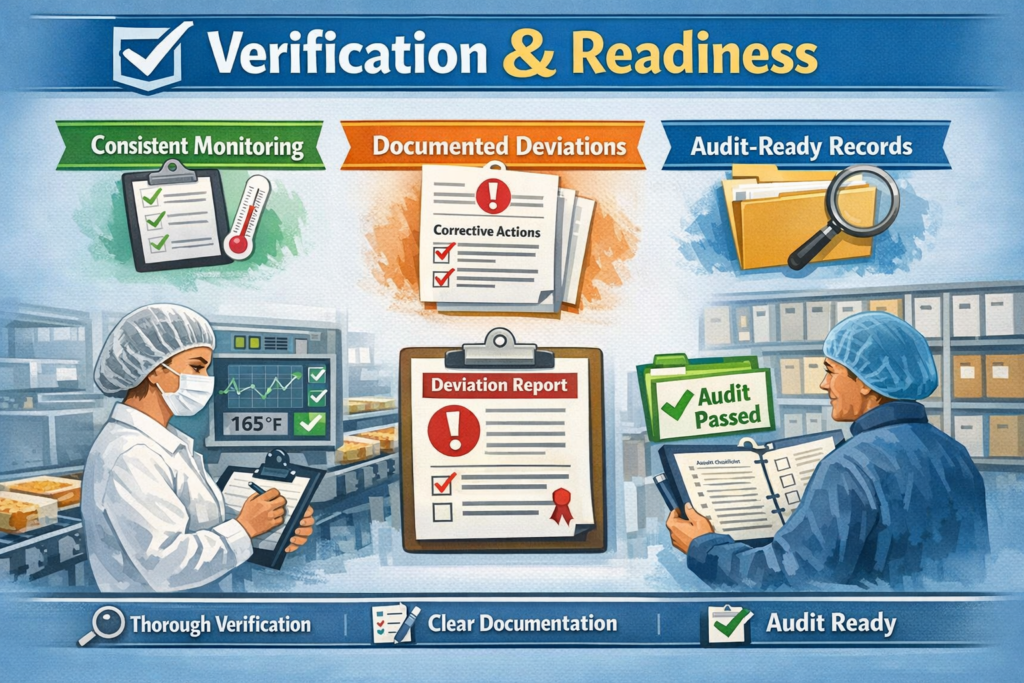
- Verification & Readiness
- Consistent monitoring, documented deviations, audit-ready records
Assessment & Alignment
- Evaluate current HACCP system
- Align hazard analysis with actual operations
- Identify compliance gaps and risks
System Deployment
- Implement CCP monitoring systems
- Establish validation and critical limits
- Deploy structured recordkeeping processes
Verification & Readiness
- Ensure consistent monitoring execution
- Document deviations and corrective actions
- Maintain complete, audit-ready records
Controlled hazards • Validated systems • Consistent execution • Inspection-ready operations
If HACCP Isn’t Managed, It Isn’t Controlled
We deliver fully managed HACCP systems aligned with regulatory and certification requirements.
Compliance Alignment
- U.S. Food and Drug Administration (FDA)
- United States Department of Agriculture (USDA)
- Safe Quality Food Institute (SQF)
- BRCGS Global Standards
Get Started
- HACCP Gap Assessment
- CCP Validation Review
- Full System Implementation
Outcome
- Fully managed HACCP system
- Validated and verifiable controls
- Consistent execution across operations
- Audit-ready compliance
Not just compliant — fully managed, controlled, and proven.
Book a ConsultationAyaPortfolio Theme Powered by WordPress